
Online Therapy in Ontario: Does It Work, and What Is It Like?
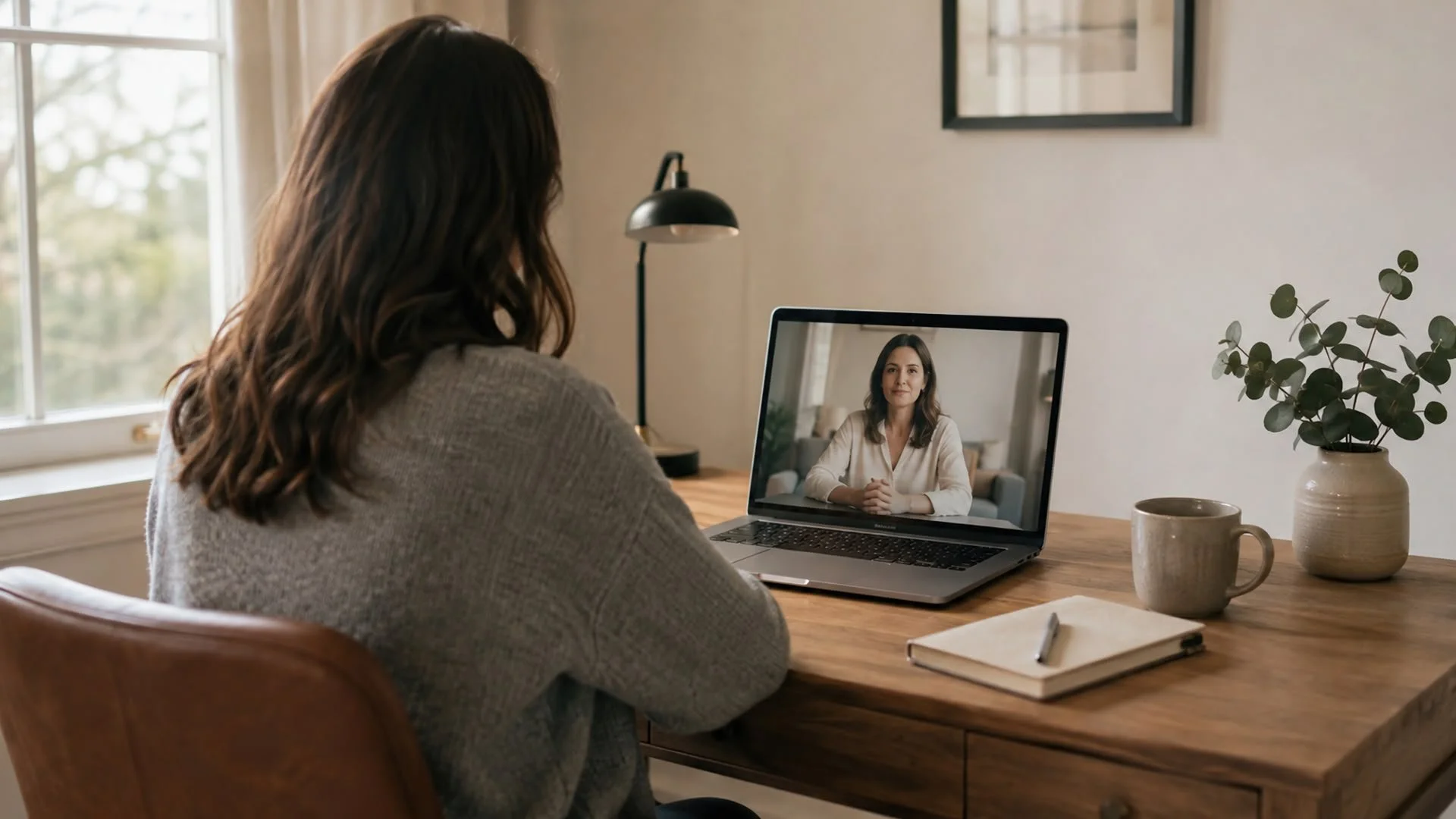
Online therapy in Ontario has become a regular part of how people get mental health support. Many people now meet with a therapist by video from home, or from a quiet room on a lunch break, and for some it's the only way therapy fits into their week.
Still, a lot of people hesitate before booking. They wonder whether talking to a therapist through a screen can really help, what a session actually looks like, and whether their information stays private. These are fair questions, and knowing the answers can make the decision feel a lot more manageable.
Does Online Therapy Work as Well as In-Person Therapy?
Research comparing the two has found very little difference. A 2021 meta-analysis of more than 50 studies of therapy delivered live by video found that people improved substantially, and that outcomes differed only negligibly from in-person therapy. Results were especially strong for anxiety, depression and PTSD.
The therapy relationship is one of the strongest predictors of how well therapy goes, and that connection can be built over video too. Some people even find it easier to open up from a familiar space.
For people working through trauma, being in a space they know and have chosen can feel steadier, which can make it easier to stay present in the work.
What Is an Online Therapy Session Actually Like?
Most of online therapy is exactly the same as therapy in an office. The conversation, the session length, the policies and the work you do with your therapist usually don't change. What changes is mostly how you get there.
In person, you travel to the office, find the building, take the elevator up, settle into a seat in the waiting room and wait for your therapist to come down the hallway and call your name. Online, you find a private spot you've chosen, click the link, turn your video on and wait for your therapist to let you into the virtual room.
You're still waiting for someone to come and get you. You're just doing it from a chair you picked.
The other difference is the technology. In your first session, your therapist should walk you through the plan if the video drops, such as switching to a phone call, and how long they'll wait on the video call if you can't connect, so you know what to expect.
How Do You Get Ready for an Online Therapy Session?
Getting ready for an online session is a lot like getting ready for an in-person one. Before an office appointment, you might check the map, figure out how long it will take to get there and double-check the address, so you arrive on time and in the right place.
Online, the checklist just looks different. Test your camera and microphone, find the link ahead of time, and make sure you have a private place where you won't be overheard. Headphones help, both for privacy and for hearing your therapist clearly.
Whether you meet online or in person, it helps to leave a little buffer before and after your session. Some sessions feel light and meaningful, while others feel heavier or stir up emotions you need a few minutes to sit with before you get on with the rest of your day. Going straight from a work meeting into therapy, and straight back again, can make it harder to settle in or to close things up, so giving yourself that transition time is good practice for therapy in general.
Is Online Therapy in Ontario Private and Secure?
Privacy deserves extra attention in virtual therapy, because your sessions pass through technology rather than staying inside one room. In Ontario, regulated therapists need your consent before providing therapy through technology, and they are expected to use a platform that protects your health information from loss and unauthorized access.
It's reasonable to ask a therapist which platform they use and how your information is stored before you book. On your end, use your own device rather than a work computer, join from a private network rather than public wifi, and close other apps during your session.
Is Online Therapy Right for You?
Fit matters as much online as it does in person: a therapist whose experience matches what you want to work on, an approach that makes sense to you, and a schedule you can keep up with.
MindSeed provides virtual psychotherapy across Ontario. New clients start with a free intake call, a conversation about your goals and needs so you can be matched with a clinician whose training and experience fit what you're looking for. If you're wondering whether online therapy could work for you, it's a simple place to start.
Online Therapy in Ontario: Frequently Asked Questions
Does insurance cover online therapy in Ontario?
Many extended health benefit plans include psychotherapy, but plans differ in which types of therapists they cover and how much. If you have benefits, check whether your plan covers psychotherapy, which professionals it includes, and whether virtual sessions are covered the same way as in-person ones.
Can I do online therapy if I'm travelling outside Ontario?
Let your therapist know before your session. Where you are at the time of a session can affect what a therapist registered in Ontario is able to offer, so they can talk with you about your options ahead of time.
Do I need a referral for online therapy in Ontario?
You don't need a doctor's referral to see a registered psychotherapist or social worker for online therapy. Some benefit plans do ask for one before they'll reimburse sessions, so it's worth checking your plan.